How to Learn the Pediatric Cardiac Surgical ICU Care:
A Resource Based Guide for PICU Doctors
Dr Muhammad Shahzad Munir – KFSH &RC Riyadh KSA
Introduction - Pediatric Cardiac Surgical ICU Care
Post-surgical pediatric cardiac ICU care is not a topic you “read once.” It is a discipline built at the intersection of congenital cardiac anatomy, cardiopulmonary physiology, surgical intent, hemodynamic monitoring, advanced devices, ventilation strategies, vasoactive pharmacology, arrhythmias, renal protection, anticoagulation, nutrition, and neurodevelopmental care.
For PICU doctors, the challenge is not the scarcity of information. The challenge is knowing which resources are worth your time, how to sequence them, and how to convert reading into practical bedside competence.
This Doctors Digest blog is a learning pathway for clinicians who want to become safer, smarter, and more structured in caring for postoperative congenital hearts.
Why Post-Cardiac Surgical ICU Care Feels Different
A child after congenital heart surgery is not simply a “post-op ICU patient.” The operation has changed the physiology, but it has not always normalized it.
A good cardiac intensivist asks three questions repeatedly:
.
> What was the pre-operative physiology?
Was it duct-dependent systemic flow, pulmonary over-circulation, single ventricle physiology, pulmonary hypertension, or ventricular dysfunction?
> What exactly did the surgeon change?
Was the lesion repaired, palliated, rerouted, banded, shunted, or staged?
> What physiology should I expect now?
The post-op target after VSD closure is not the same as after arterial switch, Glenn, Fontan, TAPVR repair, Norwood, AVSD repair, or TOF repair.
This is why learning cardiac ICU care requires both lesion-specific knowledge and ICU pattern recognition.
1. Start with the Core Professional Society: PCICS
The Pediatric Cardiac Intensive Care Society (PCICS) is one of the most important professional homes for clinicians caring for critically ill children with congenital and acquired heart disease.
Best Use
Use PCICS as your “anchor” resource for structured cardiac ICU education.
Key Resources
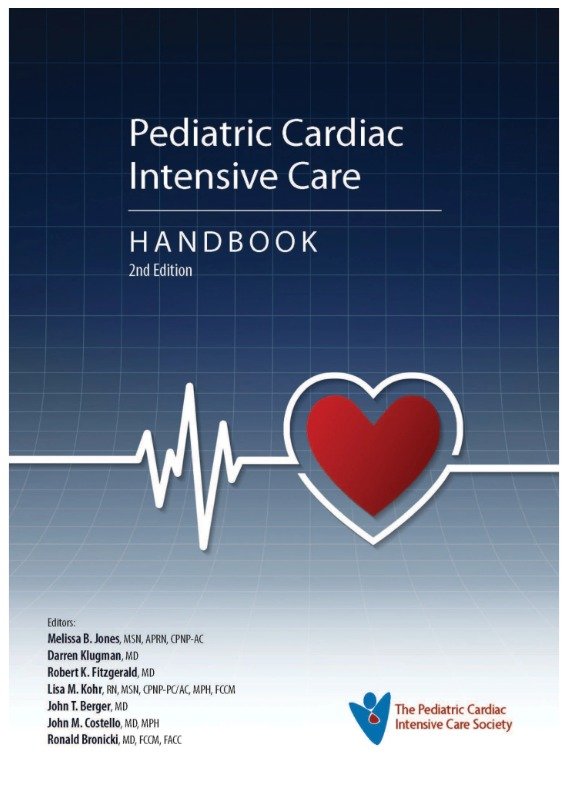
- PCIC Handbook, 2nd Edition
- PCICS Virtual Programs
PCICS virtual education includes content relevant to CICU APP practice, congenital disabilities, cardiac physiology, and pre- and postoperative care.
How I Would Use It
Do not read the handbook like a novel. Read it by clinical problem:
- Low cardiac output syndrome
- Pulmonary hypertension crisis
- Junctional ectopic tachycardia
- Post-op bleeding
- Single ventricle physiology
- Mechanical circulatory support
- Nutrition after congenital heart surgery
- Ventilation–circulation interaction
That is how knowledge becomes usable on rounds.
2. Add a Free, High-Quality Visual Learning Platform: OPENPediatrics
OPENPediatrics, associated with Boston Children’s Hospital and Harvard Medical School, is a major open-access pediatric education platform.
Its congenital heart disease lesion library and cardiac critical care videos are particularly useful for fellows, PICU doctors, and educators.
Best Use
Use OPENPediatrics when you need to see and hear the physiology, not just read it.
Useful Areas
- Congenital heart disease lesion overviews
- Cyanotic heart disease
- Cardiac ICU concepts
- Airway and ventilation considerations
- Single ventricle physiology
- Practical pediatric critical care videos
How I Would Use It
Before managing a lesion post-operatively, watch a concise lesion video first. Then read the post-op ICU section from a handbook or guideline.
This combination is more effective than reading physiology alone.
3. Use World Society / World University Webinars for Expert-Level Teaching
The World University for Pediatric and Congenital Heart Surgery and the World Society for Pediatric and Congenital Heart Surgery provide curriculum webinars and global educational content.
Their critical care webinar series includes topics such as hemodynamic monitoring, cardiopulmonary interactions, postoperative single ventricle care, acute kidney injury, and fluid overload after cardiac surgery.
Best Use
Use these webinars when you want to hear how experts reason through complex postoperative physiology.
Why it matters:
Cardiac ICU care is often learned through language:
- Is this preload responsive?
- Is the ventricle struggling against afterload?
- Is the pulmonary vascular resistance too high?
- Is ventilation helping or hurting systemic output?
- Is the lactate from low flow, inflammation, seizures, residual lesion, or inadequate oxygen delivery?
Good webinars teach this clinical reasoning better than many static chapters.
4. Keep a Practical Postoperative Guideline at Hand
An example is the Sydney Children’s Hospitals Network guideline on congenital heart disease PICU peri-operative management.
Best Use
Use institutional guidelines as bedside checklists, not as substitutes for physiology.
What to Extract
- Immediate post-op assessment structure
- Monitoring priorities
- Expected complications
- Ventilation principles
- Hemodynamic targets
- Arrhythmia response
- Bleeding management
- Escalation triggers
- Lesion-specific red flags
Practical Point
A guideline tells you what to check. Physiology tells you why it is abnormal. Experience tells you how fast you need to act.
https://resources.schn.health.nsw.gov.au/policies/policies/pdf/2007-0051.pdf
5. Learn Enhanced Recovery After Pediatric Cardiac Surgery
The American Association for Thoracic Surgery’s congenital cardiac surgery consensus document addresses enhanced recovery after pediatric cardiac surgery.
Why PICU Doctors Should Care
Enhanced recovery is not “fast-track for everyone.” It is the disciplined avoidance of unnecessary harm.
This includes:
- Avoiding unnecessary ventilation
- Avoiding excessive opioids and benzodiazepines
- Preventing delirium
- Optimizing early nutrition
- Reducing fluid overload
- Mobilizing when feasible
- Standardizing care
Bedside Translation
Early extubation is not a badge of honor.
t is appropriate only when the child’s physiology, airway, bleeding status, ventricular function, pulmonary vascular tone, temperature, sedation state, and surgical result permit it.
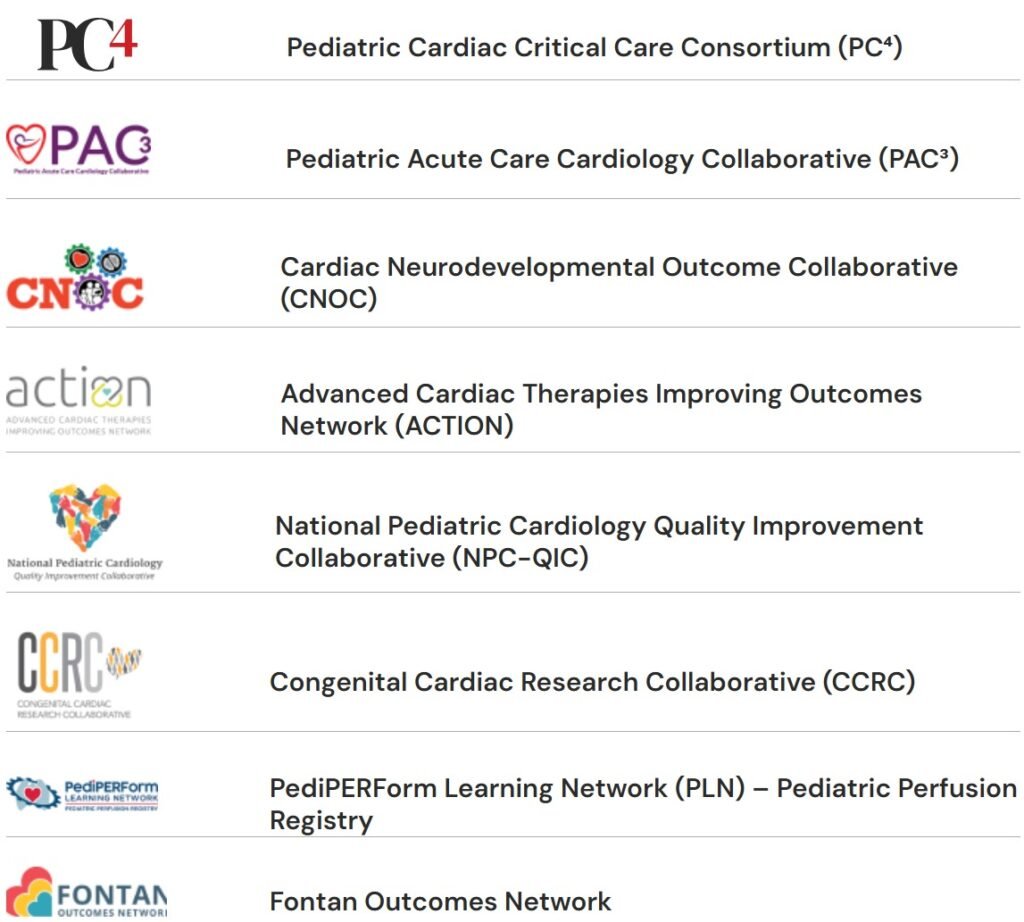
The Pediatric Cardiac Critical Care Consortium (PC⁴) is a collaborative quality improvement network.
6. Do Not Ignore Quality Improvement Resources
The Pediatric Cardiac Critical Care Consortium, known as PC⁴, is a collaborative quality improvement network focused on improving care for children with critical pediatric and congenital cardiovascular disease. It includes more than 70 children’s hospitals internationally.
Why This Matters
Cardiac ICU outcomes improve not only through individual brilliance, but through systems.
- Standardized handoff
- Early warning signs
- Extubation pathways
- Feeding protocols
- AKI prevention bundles
- Central line care
- Postoperative bleeding algorithms
- Delirium screening
- Data feedback
Message for PICU Doctors
Do not only ask:
“What drug should we use?”
Ask:
“What process keeps failing?”
Link: https://pc4quality.org/
7. Add Nutrition and Developmental Care
Early postoperative cardiac care is not only about lactate and inotropes.
CHOP provides clinical pathways addressing nutrition, trophic feeding, and feeding readiness.
The American Heart Association highlights developmental care for hospitalized infants with complex congenital heart disease.
Practical ICU Implication
A cardiac ICU that manages lactate beautifully but ignores feeding, delirium, parental presence, sleep, pain, withdrawal, and neurodevelopment is not yet practicing complete care.
8. Never Forget the Textbooks / Recent Articles
Keep textbooks as these are always the best resources to know the basics.
In Short
Pediatric CSICU care is not mastered by collecting PDFs.
It is mastered by repeatedly connecting:
Anatomy → Surgery → Physiology → Monitoring → Intervention → Outcome
For PICU doctors, the goal is not to become a surgeon or cardiologist.
The goal is to become the clinician who can recognize when the repaired heart is still physiologically fragile, when the numbers are lying, when the ventilator is part of the hemodynamic problem, when lactate is more than “poor perfusion,” and when escalation cannot wait.
The best resource is not one book, one course, or one society.
It is a structured habit.
- Read the lesson
- Understand the operation
- Predict the physiology
- Watch the trend
- Question the first explanation
- Act before collapse