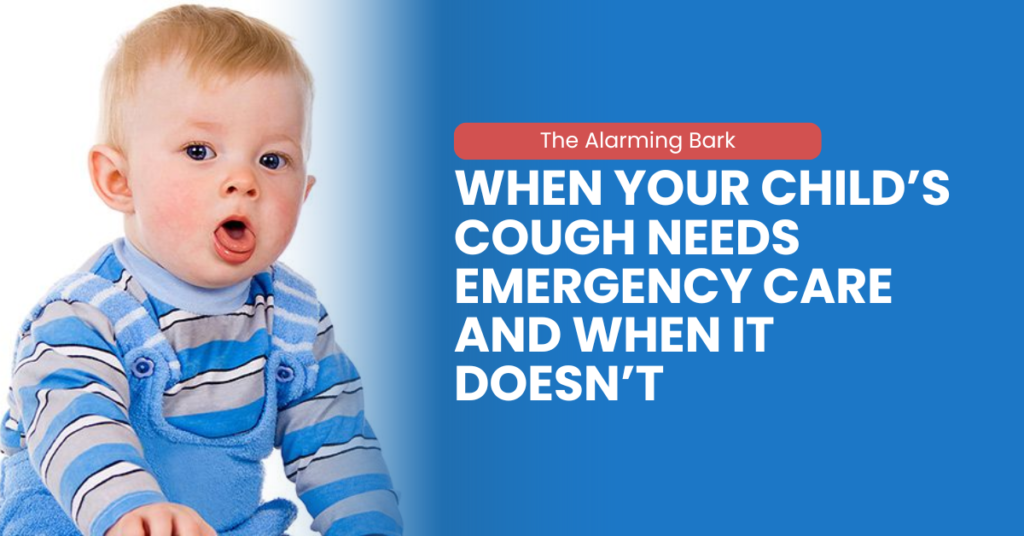
When Your Child’s Cough Needs Emergency Care and When It Doesn’t
The sound of your child coughing is never pleasant, but some coughs are truly terrifying. If you’ve ever been woken up at 2 AM by a sound that resembles a seal barking or a rattling foghorn, you know exactly what I mean. That sound can send any parent, even a calm one, straight into a panic.
Here at PediRex, we want to empower you with the knowledge to recognize the difference between a scary-sounding cough that can be managed at home and one that requires an urgent trip to the hospital.
The barking cough is most often a symptom of a condition called croup (medically known as laryngotracheitis), and while it sounds horrific, it is usually manageable.
What is That Barking Sound?
The larynx (voice box) and trachea (windpipe) are the tubes that carry air down to the lungs. Croup is caused by a virus (most often the parainfluenza virus) that causes swelling in these airways, just below the vocal cords.
Imagine trying to suck air through a straw that has been pinched in the middle. The faster and harder your child tries to breathe, the more constricted the swollen airway becomes, leading to that distinct, hoarse, barking cough sound.
The good news? It’s rarely life-threatening, but it does require close attention.

At-Home Relief for the Barking Cough
A child with a barking cough is usually much worse at night. This is because adrenaline levels drop when we sleep, which allows the smooth muscles around the airway to relax and the swelling to worsen.
If your child wakes up with that alarming sound, here are the three steps you can take right now to help them feel better:
1. The Power of Cool, Moist Air
This is often the quickest and most effective home remedy for croup. The sudden change in temperature and humidity can temporarily shrink the swollen tissues.
- Go Outside: If it’s a cold night (even below freezing), bundle your child in a blanket and step outside onto your porch or balcony for 10-15 minutes. The cold air is fantastic for reducing the swelling.
- The Freezer Trip: If stepping outside isn’t possible, open the freezer door and let your child breathe the cold air from it for a few minutes.
- A Steamy Shower (Use with Caution): Run a hot shower in your bathroom with the fan off and sit in the bathroom with your child for 15–20 minutes. While steam is often recommended, cool air is usually more effective, and some doctors now advise against steam as it can cause burns if you’re not careful. Stick to cool air first.
2. Stay Calm and Comfort Them
Your anxiety can make the cough and the child’s distress worse. When a child is crying, they inhale more forcefully, which pulls the swollen tissues closer together and makes the cough worse.
- Keep Them Upright: Have your child sit in your lap or prop them up with pillows. Lying down increases airway swelling.
- Sips of Water: Offer small sips of water or warm, clear fluids. Swallowing can sometimes help soothe the throat.
3. Consider Comfort Medication
If they have a fever or body aches accompanying the cough, Acetaminophen (Tylenol) or Ibuprofen (Motrin/Advil) can help reduce discomfort and make it easier for them to rest. Always use the correct weight-based dosage.

When a Cough is More Than Just a Cough: Know the Red Flags
While the barking cough can be scary, the most critical warning sign for any cough or respiratory illness is difficulty breathing. This is the key difference between a severe cough and a respiratory emergency.
- You must look for specific signs of distress. If you see any of the following, stop what you are doing and call emergency services or go to the nearest Emergency Room immediately:
- Stridor at Rest: A high-pitched, wheezing or squeaking sound heard when your child inhales (breathing in), and it is present even when the child is quiet or calm. This is the sound of significant airway narrowing.
- Retractions (Severe) : You can see the skin pulling in severely between the ribs, below the ribs, or above the collarbones with every single breath. This means your child is working far too hard to get air into their lungs.
- Blue or Gray Skin: A bluish or grayish tint around the lips, fingernails, or tongue. This is a sign of low oxygen and is an emergency.
- Extreme Fatigue/Lethargy: Your child is too tired to cry, barely responsive, or floppy. If they are struggling to stay awake, they are tiring out from the effort of breathing, which is a critical sign.
- A Fever in a Very Young Baby: Any baby under 3 months old with a fever of 100.4°F (38°C) or higher needs to be seen by a doctor immediately, regardless of the cough.
Final Word to the Parent
A nighttime cough can feel like a crisis, but remember that you are your child’s first and best line of defense. By recognizing the difference between the scary sound of a barking cough and the critical signs of breathing distress, you can make a clear-headed decision. Don’t hesitate to contact your pediatrician if you are ever unsure, or head to the emergency room immediately if you see any of those red flags.