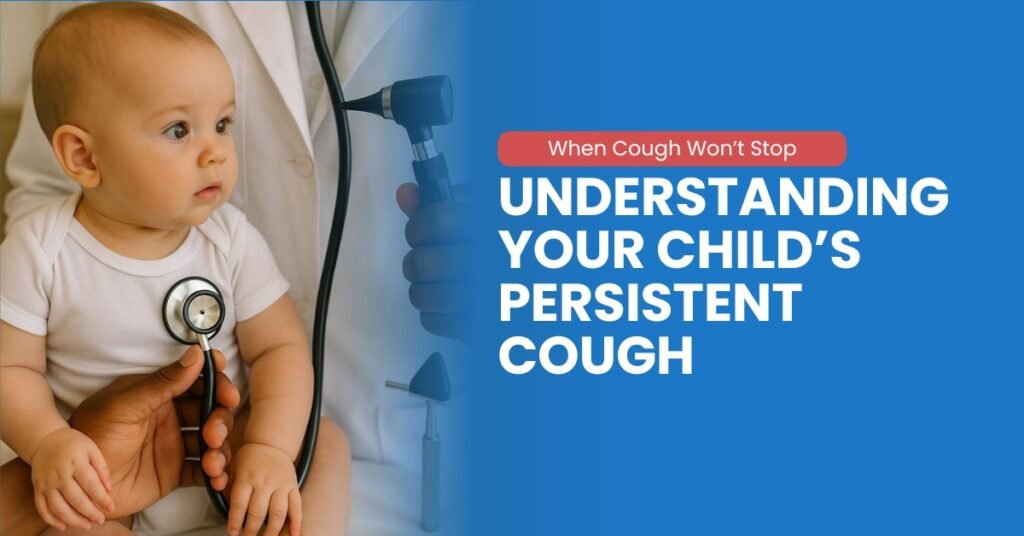
When Cough Won’t Stop: Understanding Your Child’s Persistent Cough
A child’s cough can take over an entire household. It interrupts sleep, meals, school, car rides, and often a parent’s peace of mind. Because cough is such a prominent symptom, it naturally triggers concerns: Is this a chest infection? Is it asthma? Could this be an allergy? Or something serious? While these questions are common, the reassuring truth is that most persistent coughs in otherwise healthy children come from only a small number of causes—and most are treatable or self-resolving. The key is understanding the patterns, knowing what signals to monitor, and recognizing when your child needs medical attention.
What Counts as a “Persistent” Cough?
Doctors classify coughs by duration because it helps narrow the possible causes:
- Less than 2 weeks – Most are due to common viral infections. Cough lingers even when fever or runny nose improves.
- 2 to 4 weeks – Often labeled a “prolonged viral cough” or post-viral airway hypersensitivity.
- More than 4 weeks – Considered a chronic cough, which needs a structured evaluation to identify treatable causes.
Children’s airways are smaller and more reactive than adults’, so a cough can linger longer even after minor illnesses. This alone is not a sign of a dangerous condition.

Most Common Causes of Persistent Cough in Children
Although cough can arise from many sources, in pediatrics, most prolonged or chronic coughs fall into a predictable set of conditions:
1. Viral Airway Hypersensitivity
After a viral infection, the airway lining becomes temporarily sensitive. Even mild triggers—laughing, running, cold air—can provoke a cough.
This is one of the most common reasons for a cough lasting 2–4 weeks.
2. Asthma or Cough-Variant Asthma
Asthma in children often presents as:
- Dry, repetitive cough
- Worse at night
- Triggered by exercise, laughter, or cold air
- Sometimes accompanied by a family history of asthma or allergies
Cough-variant asthma may not have wheezing, making the diagnosis less obvious.
3. Postnasal Drip from Allergic Rhinitis
Allergy-driven nasal congestion leads to mucus dripping down the back of the throat, triggering cough—especially when lying down.
Clues include sneezing, itchy eyes, runny nose, or seasonal patterns.
4. Protracted Bacterial Bronchitis (PBB)
A frequent and often under-recognized cause of chronic wet cough.
- Daily wet or “mucusy” cough for >3–4 weeks
- Typically no fever or severe illness
- Dramatically improves with a targeted antibiotic course
PBB is important because it is highly treatable.
5. Gastroesophageal Reflux (GERD)
Less common in children, but possible when:
- Cough worsens after meals
- There is frequent burping or vomiting
- Symptoms appear when lying down
6. Environmental Triggers
Smoke exposure, incense, perfumes, aerosol cleaners, and cold air can irritate the airway.
Removing the trigger often improves symptoms.
Most persistent coughs fall into these few categories, and a careful history often points quickly toward the underlying cause.
Red Flags: When It May Be More Serious
Certain symptoms require prompt medical evaluation because they suggest a condition beyond the usual viral or allergic causes:
- Persistent fever
- Rapid breathing, chest indrawing, or difficulty breathing
- Poor feeding or reduced drinking
- Weight loss or poor growth
- Night sweats
- Bloody sputum
- Cough present since early infancy
When these features appear, doctors broaden the evaluation to include more complex lung or heart conditions.

How Doctors Approach a Persistent Cough
A structured, stepwise approach avoids unnecessary tests while still identifying important causes:
1. History and Examination
- Listening for wheeze, crackles, or persistent wet sounds
- Asking about nighttime patterns, triggers, feeding, or allergies
2. Check Oxygen Levels (Pulse Oximetry)
- Simple but helpful in assessing respiratory stress.
3. Chest X-ray (When Needed)
Not always required, but useful when:
- Wet cough persists
- There are red flags
- Asthma or infection is suspected
4. Therapeutic Trials
- Inhalers for suspected asthma
- Antihistamines or nasal sprays for allergies
- A course of antibiotics for suspected PBB
5. Environmental Assessment
Removing smoke, incense, or strong fragrances often yields quick improvement.
Most children improve with this practical approach, without needing advanced testing.
What Helps—and What Doesn’t
Helpful Measures
- Warm fluids
- Honey for children over 1 year (shown to reduce nighttime cough)
- Steam from a warm shower
- Allergy treatment when indicated
- Inhalers for asthma
- Completing antibiotics if PBB is diagnosed
Not Helpful (and Sometimes Harmful)
- Over-the-counter cough syrups (no proven benefit in children)
- Antibiotics “just in case”
- Repeated nebulizations without a confirmed diagnosis
- Vapor rubs or strong chest balms (can irritate airways)
Supporting the airway and treating the underlying cause is far more effective than suppressing the cough alone.
Why Cough Is Often Worse at Night
Nighttime worsening is common and helps guide diagnosis:
- Cooler air irritates sensitive airways
- Lying flat increases postnasal drip
- Asthma symptoms peak at night due to normal hormonal rhythms
Understanding this pattern helps parents interpret what they are seeing at home.
A Message for Parents
A persistent cough can test your patience and your sleep, and it is natural to worry when it continues longer than expected. But it is important to remember:
- Most chronic coughs in children are not dangerous.
- The majority are treatable with straightforward measures.
- With the right guidance, many improve without extensive testing.
You are not alone in navigating this challenging but common symptom. With careful observation, timely medical review, and appropriate treatment, almost every child with a persistent cough returns to full health—and your home returns to quiet nights again.