Constipation is one of the most common reasons parents bring their child to a pediatrician. It can cause significant discomfort, anxiety, and even behavior changes in children, yet it is often misunderstood.
Many parents think constipation means “not passing stool every day.” In reality, constipation is more about how difficult or painful bowel movements are, rather than how often they happen.
Let’s break it down clearly.
What Is Constipation?
A child may be constipated if they have: hard, dry, or large stools; painful bowel movements; straining with stools; stool accidents after being toilet trained; or going several days without passing stool (especially if uncomfortable).
Some children pass stool daily but still have constipation if it’s painful or very hard.
Why Does Constipation Happen?
In most children, constipation is functional, meaning there is no serious disease causing it.
Common triggers include
1. Withholding Behavior
A child may avoid passing stool because of a past painful experience, fear of using the toilet, a desire to keep playing, or an adjustment to toilet training.
When stool is held in, it becomes harder and larger. The next bowel movement becomes even more painful, creating a cycle.
2. Diet Factors
Low intake of Fiber (fruits, vegetables, whole grains) and Fluids, and High intake of processed foods may worsen stool hardness.
3. Life Changes
Constipation often starts during toilet training, at the start of school, during travel, or after an illness.
.
Signs Parents Might Miss
Some symptoms don’t look like constipation at first. Instead, there are small streaks of stool in underwear (often mistaken for diarrhea), abdominal pain that comes and goes, decreased appetite, irritability, or large stools that block the toilet.
When stool builds up in the rectum, softer stool can leak around it, causing accidents. This is called overflow soiling, and it is not intentional.
When Should Parents Worry?
Most constipation is harmless, but you should see a doctor if your child has:
- Constipation starting in the first month of life
- Delayed passage of first stool after birth
- Vomiting with abdominal swelling
- Blood in stool (not just small streaks from a fissure)
- Poor weight gain
- Severe abdominal pain
- Weakness in legs
These signs are uncommon but important.
What Can Parents Do at Home?
1. Normalize the Conversation
Avoid blame or punishment. Constipation is not laziness.
Say:
- “Your tummy needs help.”
- “We’ll work on this together.”
Shame worsens withholding.
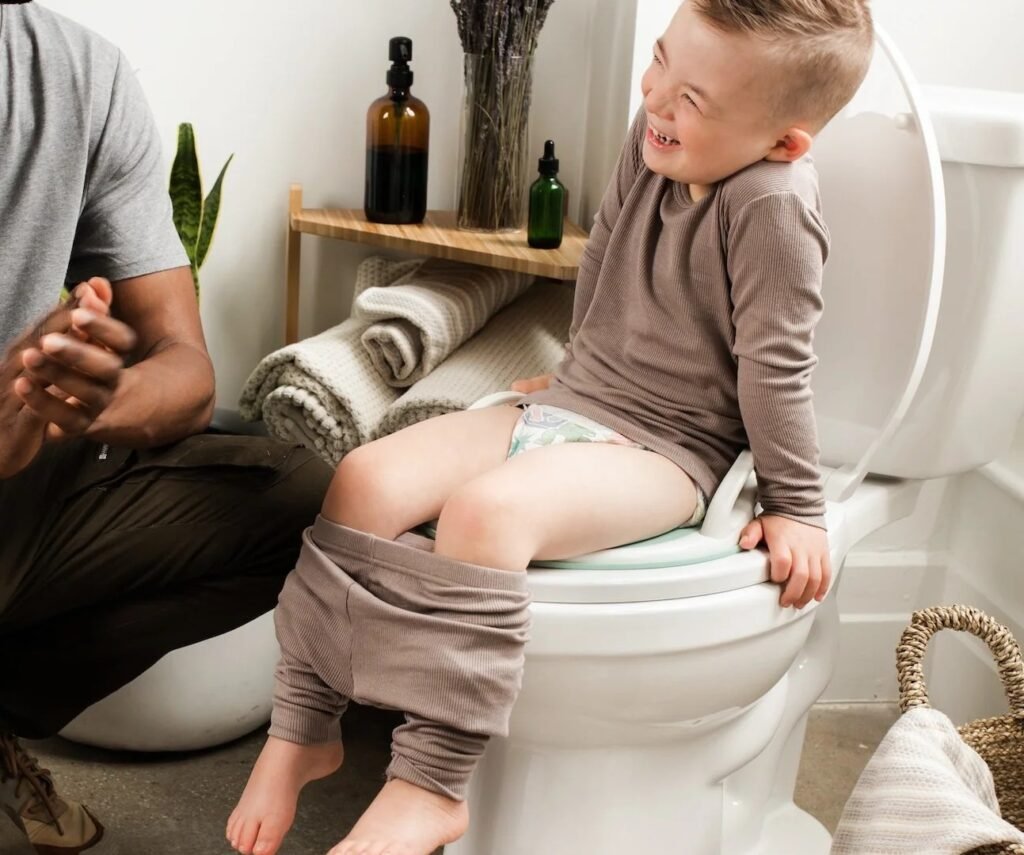
2. Establish Toilet Routine
Have your child sit on the toilet for 5–10 minutes after meals.
- Use a footstool so knees are slightly higher than hips.
- Make it relaxed, read a book, no pressure.
The body naturally wants to pass stool after eating (gastrocolic reflex).
3. Improve Diet
Increase fruits (pears, apples with skin, berries), vegetables, and whole grains, and maintain adequate water intake. Limit excess milk intake (in some children) and processed snacks.
Diet alone may not be enough once constipation is established, but it helps prevent recurrence.
4. Medications (When Needed)
Many children need stool softeners for a period of time.
Parents often worry about dependence. However:
- Stool softeners do not make the bowel “lazy.”
- They allow the rectum to shrink back to its normal size.
- Stopping too early often causes relapse.
Treatment may continue for several months, especially if constipation has been present for a long time. Always use medications under medical advice
Why Early Treatment Matters
Untreated constipation can lead to Chronic abdominal pain, Stool accidents, Fear of toileting, social embarrassment, Reduced appetite, and Recurrent urinary tract infections (due to pressure on the bladder). The longer the stool stays backed up, the more stretched the rectum becomes, and the harder it is for the child to feel the urge to go.
A Reassuring Message for Parents
Constipation is extremely common. It does not mean you did something wrong, your child is being difficult, or there is a serious disease (in most cases). With patience, routine, and proper management, most children recover fully.
Is it normal for my child not to pass stool every day?
Yes. Some children go every 2–3 days. What matters is comfort and stool consistency.
2. My child cries before passing stool. Is that normal?
Crying may signal Fear or pain. This usually improves once the stool softens.
3. Should I stop milk?
Not necessarily. Excessive milk may contribute to some children, but elimination should be discussed with your doctor.
.
4. Can constipation cause stomach pain?
Yes. It is one of the most common causes of recurrent abdominal pain in children.
.
Final Thoughts
Constipation in children is common, treatable, and often temporary. The key is:
- Early recognition
- Gentle support
- Consistency in management
- Avoiding shame or punishment
If you are unsure, your pediatrician can guide you. Small changes today can prevent long-term discomfort tomorrow.
Pedirex
Evidence-Driven Clarity for High-Stakes Pediatric Care
When seconds matter and physiology is fragile, PediRex delivers the clarity clinicians need to act decisively. From evidence-based algorithms to real-world clinical pathways, every tool is designed to support accurate, consistent decisions at the bedside.