Pedirex

Set: 1 Mcq’s of the Week

SET 1: Q: 1  A term male becomes tachypneic 30 minutes after birth. Preductal SpO₂ is 96% and postductal is 86%. No murmur. Which physiologic change most directly explains the gradient? What is the single best explanation for the differential saturation? A. Decreased endogenous prostaglandin production causing PFO closure B. Increased pulmonary venous return promoting … Read more

Case 1

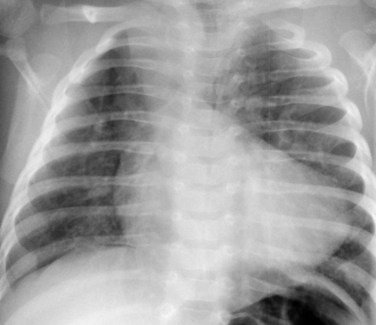
Acute Fulminant Myocarditis Presenting as Cardiogenic Shock in a Previously Healthy Child A previously healthy 4-year-old male presented to the emergency department with 24 hours of fever (38.5°C), vomiting, and progressive lethargy. Vital signs showed tachycardia at 165 bpm, hypotension (78/42 mmHg), tachypnea (36 breaths/min), and oxygen saturation 94% on room air. Physical examination revealed … Read more

Why Your Child May Be Constipated And What You Can Do

Why Your Child May Be Constipated And What You Can Do

When Cough Won’t Stop: Understanding Your Child’s Persistent Cough Constipation is one of the most common reasons parents bring their child to a pediatrician. It can cause significant discomfort, anxiety, and even behavior changes in children, yet it is often misunderstood. Many parents think constipation means “not passing stool every day.” In reality, constipation is … Read more

ECG Q: 3

ecg q 3

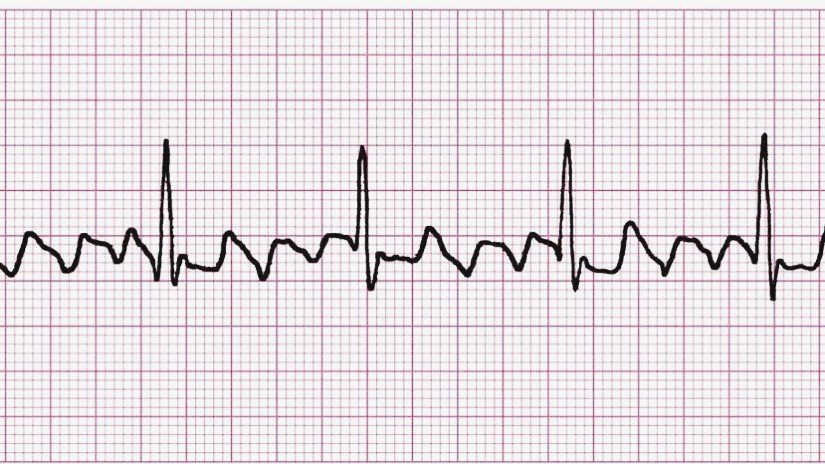
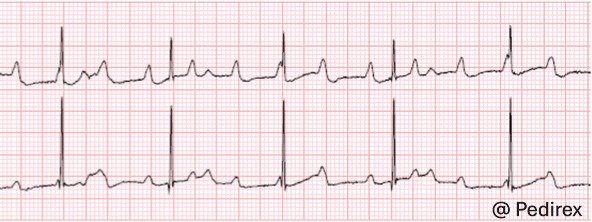
A 2-month-old infant is 8 hours post–VSD patch closure and PDA ligation. Temperature is 38.3°C, lactate is rising, and CVP is elevated. Temporary atrial and ventricular epicardial pacing wires are in place. The surface ECG (Lead II) and atrial electrogram (AEG) from pacing wires are shown above. Quiz QuestionWhat is the most likely rhythm diagnosis, … Read more

ECG Q: 2

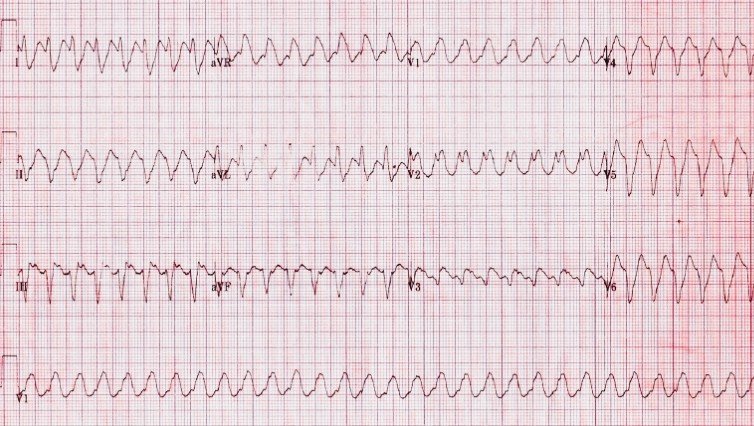
A 3-year-old boy with repaired tetralogy of Fallot (RVOT patch + transannular patch) is admitted to the cardiac ICU with worsening fatigue and presyncope. He is postoperative day 5 following pulmonary valve replacement. He suddenly develops a regular wide-complex tachycardia at 220/min, with MAP decreasing to 45 mmHg despite fluid bolus. Near-infrared spectroscopy demonstrates declining … Read more

ECG Q: 1

ECG Q 1

A 6-year-old child on postoperative day 2 after atrial septal defect repair develops sudden tachycardia with a heart rate of 160–170/min. Blood pressure is stable but trending downward. The monitor shows a regular narrow-complex tachycardia. The child is irritable with mild hepatomegaly and rising lactate. Adenosine transiently slows the ventricular rate, but the tachycardia immediately … Read more

Picture Q 5

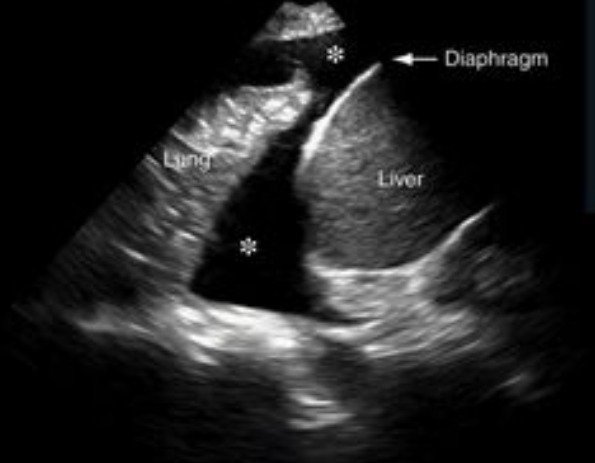
A 4-year-old child with severe pneumonia is mechanically ventilated for hypoxemic respiratory failure. On day 3, oxygen requirement increases (FiO₂ 0.75), PEEP is 8 cmH₂O, and plateau pressures are rising. The child develops tachycardia, increasing ventilator asynchrony, and decreased right-sided breath sounds. Bedside lung ultrasound is performed. The image above is obtained from the right … Read more

Picture Quiz 4

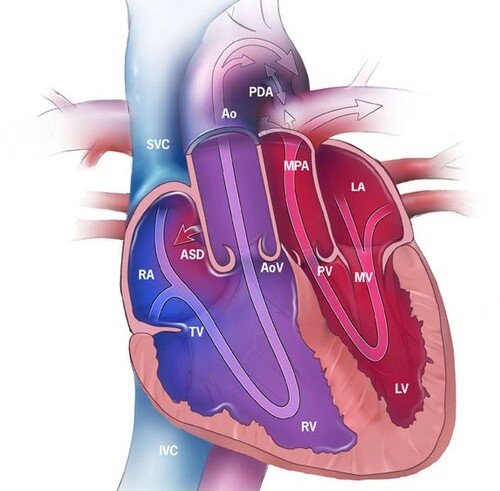
A 2-day-old term neonate, birth weight 3.2 kg, is admitted urgently to the Pediatric Cardiac ICU for profound cyanosis noted shortly after birth. Pregnancy and delivery were uncomplicated, and Apgar scores were reassuring. However, within hours, the infant developed persistent hypoxemia with oxygen saturations in the 60s despite 100% oxygen.The infant is tachypneic but not … Read more

Picture Quiz 3

A 3-month-old infant, weight 4.5 kg, is admitted to the Pediatric Cardiac ICU from the emergency department for worsening cyanosis and episodic desaturations, particularly during agitation and feeding. The infant was born at term, has had poor weight gain, and has not undergone prior cardiac surgery.On arrival to the ICU, the child is tachypneic with … Read more

Article of Week

All Articles One key paper distilled into clinically usable insights for the team All Articles Date Section Title Link 4th D25 Respiratory System Intravenous Bronchodilators in Pediatric Critical Asthma: A Systematic Review and Network Meta-Analysis Click Here 3rd D25 Nutrition Nutritional support for children during critical illness: European Society of Pediatric and Neonatal Intensive Care … Read more