Millions of children are already using AI chatbots every day — for homework help, creative stories, and simple questions. But is ChatGPT truly safe for kids? This guide breaks down everything parents and educators need to know.
You have probably heard your child mention ChatGPT at least once. Maybe they used it to finish a school essay, get help with math, or chat for fun. Artificial intelligence tools are growing fast, and kids are among the most curious users. According to Common Sense Media, more than half of teenagers in the United States have already tried an AI chatbot.
That makes it more important than ever for parents to understand both the benefits of using ChatGPT for kids and the very real risks of ChatGPT for children. This article will walk you through everything — from what ChatGPT actually is, to how you can use it wisely as a family learning tool.
What Is ChatGPT? (Simple Explanation for Families)
ChatGPT is an AI chatbot made by a company called OpenAI. It works like a very smart text assistant. You type a question or a sentence, and it writes back a detailed, human-sounding answer. It can explain science topics, write short stories, help with grammar, translate languages, or even tell jokes.
Think of it like a digital encyclopedia that can hold a real conversation. Unlike a regular search engine, it does not just give you links — it gives you direct answers. That is part of why so many kids find it exciting and helpful.
To learn more about what ChatGPT is and how it works, you can read the official OpenAI ChatGPT page.
Benefits of Using ChatGPT for Kids
When used in the right way, ChatGPT for kids can be a powerful educational partner. Here are the most important benefits:
Top Benefits at a Glance
- Helps with homework explanations in simple language
- Encourages creative writing and storytelling
- Answers curious questions instantly, any time of day
- Supports children who learn at their own pace
- Acts as a patient tutor with no judgment
- Boosts digital literacy and tech skills early
1. Personalized Learning Support
Every child learns differently. Some need extra time to understand a topic, while others want to dive deeper. ChatGPT adapts to any question. A child struggling with fractions can ask the same question in ten different ways and get a patient explanation every time. This kind of personalized support is something even the best teachers find hard to provide for every student at once.
2. Sparking Creativity and Imagination
Kids love storytelling. With ChatGPT, a child can say “write me a story about a dragon who loves cooking” and instantly get a fun, creative piece they can continue, change, or use as inspiration. This kind of creative collaboration can help develop writing skills and imagination in a way that feels more like play than school.
3. ChatGPT as a Parent's Education Tool
Parents can also use ChatGPT to support their children’s education directly. You can ask it to explain a school topic in simple terms so you can teach your child more clearly. It helps busy parents stay involved in learning without needing a degree in every subject. Think of it as a knowledgeable co-teacher available at midnight before a big exam.
4. Building Digital Literacy
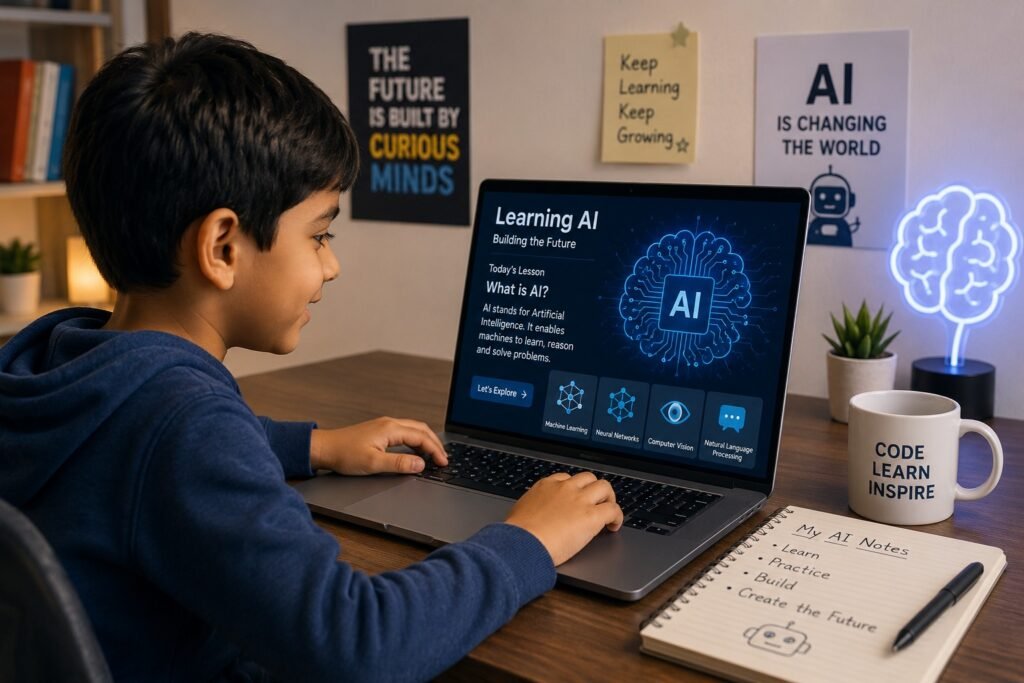
Children who learn to interact thoughtfully with AI tools today are building skills for tomorrow’s job market. Learning how to ask good questions, evaluate answers critically, and use AI responsibly is quickly becoming as important as reading and writing.
Risks of ChatGPT for Kids — What Parents Must Know
The benefits are real — but so are the risks of AI chatbots for kids. Being informed helps you protect your child while still allowing them to benefit from this technology.
Key Risks and Limitations of ChatGPT for Children
Can produce inaccurate or misleading information
- May generate age-inappropriate content without proper controls
- Encourages over-reliance instead of independent thinking
- Privacy concerns — data and conversations may be stored
- No emotional understanding; can give cold or confusing replies
Can be used to cheat on school assignments
1. Misinformation and Hallucinations
One of the biggest limitations of ChatGPT for children is that it sometimes makes things up. In the AI world, this is called “hallucination.” The chatbot might confidently give a wrong answer — a wrong date in history, an incorrect math formula, or a fake fact. Children, especially younger ones, may not question these answers. That is why adult supervision and fact-checking are so important.
2. Inappropriate Content Risks
Although OpenAI has built filters into ChatGPT, it is not foolproof. With clever prompting, children can sometimes access content that is violent, sexual, or emotionally harmful. This is why ChatGPT parental controls and active supervision are essential — especially for younger children under 13.
3. Privacy and Data Safety
When a child uses ChatGPT, their conversations may be stored and used to improve the AI model. This raises serious privacy concerns. Children should never share personal details like their full name, school name, home address, or phone number in any AI chat window. For more on child online privacy, see the FTC’s COPPA guidelines.
4. Risks of Over-Reliance on AI
When children use ChatGPT to write their essays or solve their problems without trying first, they miss the learning process. The real growth happens in the struggle. If AI does all the thinking, children may fall behind in critical thinking, problem-solving, and writing skills that are still tested and valued in school and life.
Best Practices for Using ChatGPT with Children
OpenAI requires users to be at least 13 years old to use ChatGPT. For users under 18, parental or guardian permission is required. However, there is currently no built-in parental dashboard in ChatGPT that lets parents monitor conversations in real time.
Here is what parents can do right now to strengthen ChatGPT parental controls:
Practical Steps for Parents
Create and manage your child’s ChatGPT account yourself
- Use devices in shared family spaces, not bedrooms
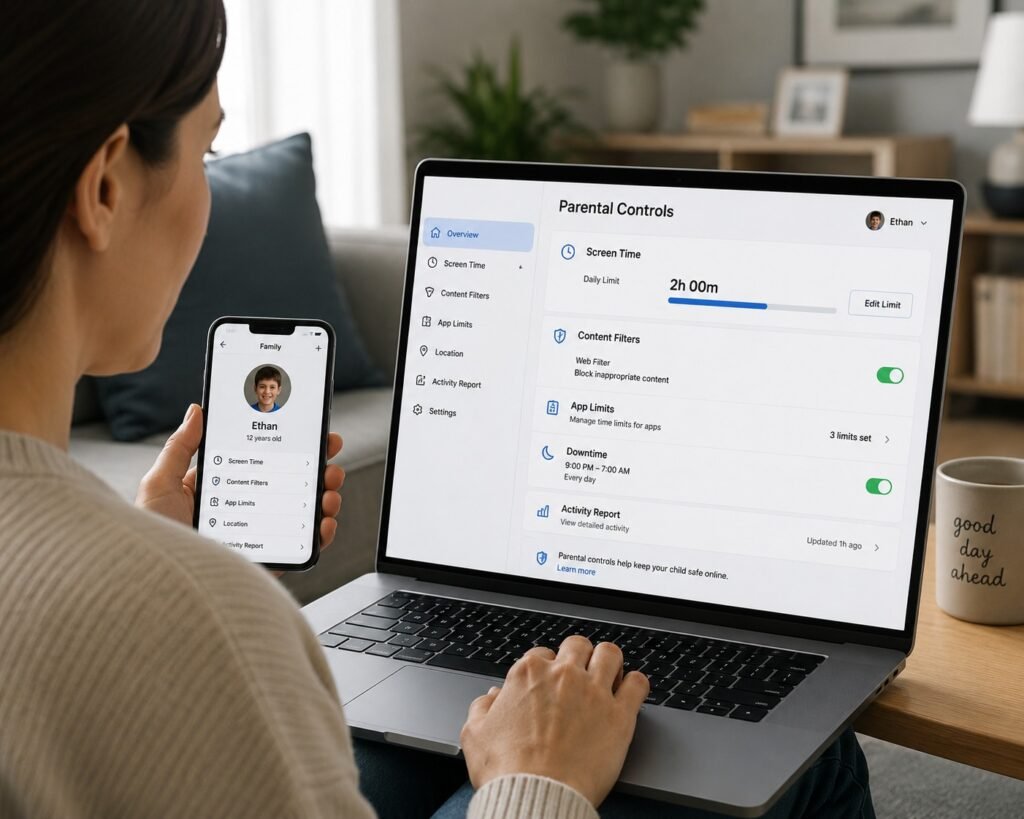
- Enable screen time controls through your device’s settings (iOS Screen Time, Google Family Link)
- Use browser filtering tools to block AI chatbot sites if needed
- Regularly review conversation history with your child
• Consider child-specific AI tools designed with safety in mind
The Future of ChatGPT in Children's Health and Education
Looking ahead, the role of AI in children’s lives will only grow. Researchers and educators are exploring how AI can support children with learning disabilities, language barriers, and mental health challenges. For example, some schools are already experimenting with AI tutors that identify when a student is struggling and adjust lessons in real time.
In healthcare, the future of ChatGPT in child health looks promising, too. AI tools may help parents understand medical advice more clearly, track developmental milestones, and connect with pediatric resources. However, it is critical to remember that ChatGPT is not a medical professional — it should never replace a real doctor’s guidance. For any health concerns about your child, always consult a licensed healthcare provider.
The World Health Organization continues to study the effects of AI chatbots on kids and their overall digital wellbeing — a topic that will shape education policy globally in the coming years.
Frequently Asked Questions (FAQ)
Is ChatGPT safe for children to use alone?
ChatGPT is generally safer when used under adult supervision. Younger children, especially, should not use it without a parent nearby. Older teens can use it more independently, but should always fact-check answers and avoid sharing personal information.
What age is appropriate for ChatGPT?
OpenAI’s minimum age requirement is 13. For children between 13 and 17, parental consent is recommended. Younger children can still benefit from AI learning, but through child-safe platforms designed specifically for their age group.
Can ChatGPT help my child with homework?
Yes — but with boundaries. ChatGPT works best as a tutor that explains concepts, not as a tool that does the work for your child. Encourage your child to try the problem first, then use ChatGPT to check or understand their approach.
Are there better AI tools designed specifically for kids?
Yes. Tools like Khanmigo by Khan Academy (khanmigo.ai) are built specifically for students with safety in mind. These may be better starting points for younger children before they graduate to general tools like ChatGPT
What are the biggest risks of AI chatbots for kids?
Yes — but with boundaries. ChatGPT works best as a tutor that explains concepts, not as a tool that does the work for your child. Encourage your child to try the problem first, then use ChatGPT to check or understand their approach.
Final Thoughts
be one of the most powerful learning companions a child has ever had. The key is balance: let it spark curiosity and help with understanding, but never let it replace the hard work of thinking, creating, and learning on your own.
As a parent or educator, your role is not to shield children from technology — it is to guide them through it. Set clear boundaries, stay involved, and use ChatGPT as a conversation starter, not a conversation ender.
Want to go deeper? Read our related guides on digital safety for children online and how to build healthy screen time habits as a family.